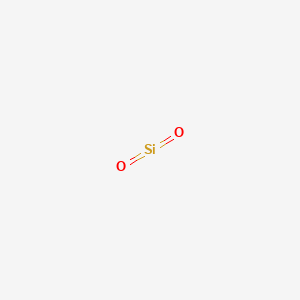
Silicic anhydride
CAS No.: 7631-86-9
- Molecular Formula: SiO₂
- Molecular Weight: 60.084 g/mol
Chemical type
- Inorganic compound (often present as dissolved silicic acid or silicates in water)
- Inorganic oxide; mesoporous support material
Key properties
- High concentration in blow-down water (~50 mg/L as Si)
- Solubility of approximately 120 mg/L at 25 °C, increasing with temperature (e.g., higher at 35–45 °C)
- Temperature-dependent solubility, making it prone to precipitation at elevated concentrations
- Dominant cause of membrane scaling in RO systems due to concentration polarization
- Difficult to mitigate with commercial anti-scalants
- Detected on fouled membranes via SEM-EDS and ultrasonic extraction (normalized loading: 18.8 mg/m²)
- High surface area
- Chemical inertness
- Thermal and mechanical stability
- Natural contaminant in cooling and boiler water systems
- Accumulates in circulating water during power generation processes
- Catalyst support in nanofiber and composite catalysts
- Improves dispersion of active metal nanoparticles
Classification by use
- Membrane fouling/scaling agents
- Impurities in industrial wastewater (e.g., blow-down from thermal power plants)
- Chemicals used as catalyst supports
- Chemicals used in nanostructured materials
- Chemicals used in heterogeneous catalysis
A trustworthy factory and manufacturer
- [Cite:1] Reverse osmosis treatment of blow-down water for beneficial reuse and sustainable power generation, Case Studies in Chemical and Environmental Engineering, Volume 13, June 2026, 101306
- [Cite:1] Sustainable inorganic nanocatalysts in biodiesel production - A review on recent developments, Fuel Processing Technology, Volume 282, April 2026, 108406