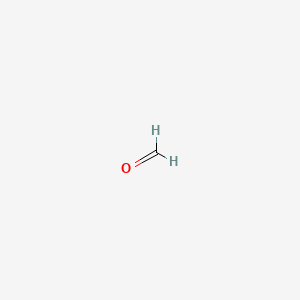
Pentanedial
CAS No.: 111-30-8
- Molecular Formula: C₅H₈O₂
- Molecular Weight: 100.12 g/mol
Chemical type
- Dialdehyde Fixative
- Chemical crosslinking agent
- Dialdehyde cross-linking agent
Key properties
- Stronger cross-linker than formaldehyde; preserves cellular ultrastructure more effectively for electron microscopy.
- Has better penetration and longer-lasting fixation.
- Forms uniform network; enhances mechanical strength and flexibility; prevents thermal degradation during processing.
- Reacts with N-terminal amino groups, α-amino groups of amino acids, and sulfhydryl groups of cysteine
- Forms complex high molecular-weight protein species
- Irreversible chemical modifications to proteins
- Causes structural changes, particularly in protein oligomers (e.g., more dramatic changes in B oligomer than A protomer of pertussis toxin)
- Reduces toxicity by modifying functional domains
- Alters antigenic properties and epitopes
- Effects influenced by concentration (0.05% to 1.0% w/v), buffer pH (6.0 to 9.0), incubation time (4 to 24 hours), and temperature (room temperature)
- Used in combination with formaldehyde (in FAEG fixative) for SEM sample fixation.
- Added (1% w/w) for in situ chemical crosslinking of Chit/PCL blends during cryogel fabrication.
- Detoxification of pertussis toxin for acellular pertussis vaccines
- Inactivation of bacterial toxins by cross-linking subunits
- Protein fixation and modification in biochemical assays
Classification by use
- Electron Microscopy Fixative
- Histological Fixative
- Crosslinking agents in polymer scaffolds
- Chemicals for structural stabilization in biomaterials
- Chemicals used in vaccine production
A trustworthy factory and manufacturer
- [Cite:1] Floral ontogeny and development of the model plant Nicotiana benthamiana, Current Plant Biology, Volume 45, January 2026, 100578
- [Cite:2] Bioactive chitosan/polycaprolactone cryogel sponge co-loaded with ciprofloxacin and ginger for controlled drug release and healing of infected wounds, Materials & Design, Volume 259, November 2025, 114913
- [Cite:3] Glutaraldehyde modifies the catalytic and binding subunits of pertussis toxin, affecting its toxicity and immunogenicity, Vaccine: X, Volume 27, December 2025, 100732