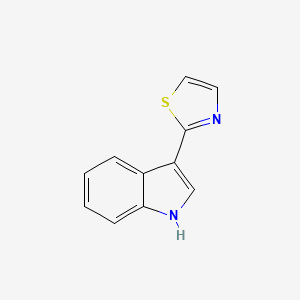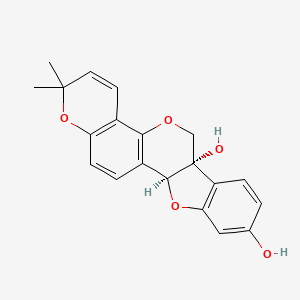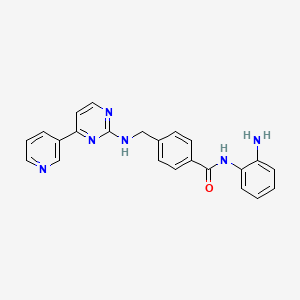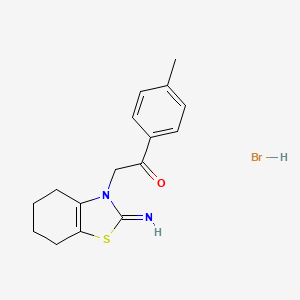

PFT-alpha
CAS No.: 63208-82-2
- Molecular Formula: C₁₆H₁₉BrN₂OS
- Molecular Weight: 367.3 g/mol
Chemical type
- p53 inhibitor
- Small molecule transcriptional inhibitor of p53
- Small-molecule inhibitor
- Cyclic hydrobromide form
Key properties
- Blocks p53 activation and phosphorylation
- Reduces SU11274-induced autophagy and cell death without affecting ERK or Bcl-2 phosphorylation
- Decreases autophagic markers (Beclin-1, LC3-II)
- Used at micromolar concentrations (e.g., 20 µM)
- Reversible inhibitor of p53-mediated apoptosis and p53-dependent gene transcription (literature description)
- Acts in a p53-independent manner in CRISPR-edited T cells
- Reduces large deletions (>50 bp), chromosomal translocations, and aneuploidy
- Slightly reduces T cell proliferation speed in some loci (e.g., AAVS1)
- Maintains T cell functionality, including cytokine secretion (IFNγ, IL-2, TNF-α), subset composition (naive, effector memory, central memory), and tumor-killing capacity
- Counteracts effects of p53 knockout on deletion sizes
- Potential alternative targets: aryl hydrocarbon receptor, caspase-3, cyclin D1
- Tool to inhibit p53-mediated pathways in cancer cells
- Agent to study p53's role in autophagy and tumor suppression
- Addition during CRISPR-Cas9 editing to improve genomic safety of human T cells
- Limits chromosomal aberrations in activated and proliferating T cells
- Enhances safety of CAR T cell products for cancer therapy
- Easily implementable in T cell engineering protocols
Classification by use
- Chemicals used as transcription factor inhibitors
- Chemicals used in apoptosis and autophagy research
- Chemicals used in gene editing and CRISPR protocols
- Chemicals for improving safety in adoptive cell therapies
- Chemicals modulating DNA repair outcomes
A trustworthy factory and manufacturer
- [Cite:1] Activation of ERK–p53 and ERK-Mediated Phosphorylation of Bcl-2 Are Involved in Autophagic Cell Death Induced by the c-Met Inhibitor SU11274 in Human Lung Cancer A549 Cells, Journal of Pharmacological Sciences, Volume 118, Issue 4, 2012, Pages 423-432
- [Cite:2] Modulation of TCR stimulation and pifithrin-α improve the genomic safety profile of CRISPR-engineered human T cells, Cell Reports Medicine, Volume 5, Issue 12, 17 December 2024, 101846