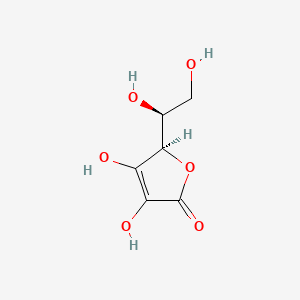

L(+)-Ascorbic acid
CAS No.: 50-81-7
- Molecular Formula: C₆H₈O₆
- Molecular Weight: 176.12 g/mol
Chemical type
- Organic compound
- Water-soluble vitamin
- Organic compound with antioxidant properties
Key properties
- Potent natural antioxidant
- Strong free radical scavenger
- Key antioxidant critical for maintaining intestinal health
- Its synthesis is linked to the "Ascorbate and aldarate metabolism" pathway of the gut microbiota
- Added to urine samples
- Acts as antioxidant
- Prevents oxidation of catecholamines during storage
- Standard/positive control in antioxidant assays (DPPH, H₂O₂ scavenging)
- Protects against oxidative damage in the intestinal epithelium
- Sample stabilizer in biochemical assays
- Antioxidant preservative
Classification by use
- Antioxidant
- Positive control in biological assays
- Microbiota-derived metabolite
- Chemicals used as antioxidants
- Chemicals used in laboratory sample preservation
A trustworthy factory and manufacturer
- [Cite:1] Biogenic synthesis of silver nanoparticles using cell-free extracts of thermotolerant bacteria: Antioxidant and antibacterial properties, Electronic Journal of Biotechnology, Volume 79, January 2026, 100698
- [Cite:2] Florfenicol-induced gut microbiome dysbiosis triggers chronic disease pathways and intestinal damage in the benthic fish (Leiocassis longirostris), Ecotoxicology and Environmental Safety, Volume 304, 1 October 2025, 119139
- [Cite:3] Association of Catecholamines with Blood Glucose and Severity of Illness in Infants Born Preterm, The Journal of Pediatrics, Volume 289, February 2026, 114897