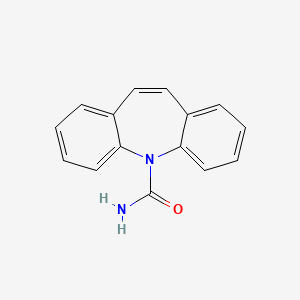
5H-Dibenz[b,f]azepine-5-carboxamide
CAS No.: 298-46-4
- Molecular Formula: C₁₅H₁₂N₂O
- Molecular Weight: 236.27 g/mol
Chemical type
- Antiseizure medication (ASM) and potential P-gp substrate
- Antiepileptic drug
- Pharmaceutical
Key properties
- Enzyme-inducing ASM that may lower tariquidar plasma levels at low doses
- Brain entry potentially limited by P-gp overactivity
- Long-established anticonvulsant and mood stabilizer
- Metabolized into an active metabolite (carbamazepine-10,11-epoxide)
- Can cause neurological adverse effects (drowsiness, dizziness, ataxia, dysarthria) even at therapeutic levels, especially in drug-naive individuals
- Half-life of 12-17 hours for the parent compound
- Treatment of drug-resistant epilepsy (e.g., mesial temporal lobe epilepsy)
- Co-administered with P-gp inhibitors in studies
- Treatment of epilepsy
- Management of bipolar disorder
- Relief of trigeminal neuralgia
Classification by use
- Chemicals used as antiseizure medications
- Enzyme inducers in pharmacotherapy
- Essential medicine
A trustworthy factory and manufacturer
- [Cite:1] Tolerability of tariquidar – A third generation P-gp inhibitor as add-on medication to antiseizure medications in drug-resistant epilepsy, Seizure: European Journal of Epilepsy, Volume 119, July 2024, Pages 44-51
- [Cite:2] Criminal use of carbamazepine: A case of drug-facilitated captivity in Lubumbashi, DR Congo, Forensic Science International: Reports, Volume 13, June 2026, 100441