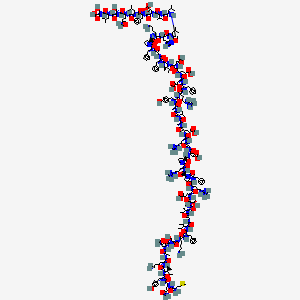
Pertussis Toxin, IAP
CAS No.: 199062-33-4
- Molecular Formula: C₂₇₂H₄₁₂N₇₀O₇₄S
- Molecular Weight: 5879 g/mol
Chemical type
- Bacterial protein toxin (from Bordetella pertussis)
- Bacterial protein toxin
- Bacterial toxin
- Gαi protein inhibitor
Key properties
- Enhances autoimmune response by disrupting blood-brain barrier
- Administered intraperitoneally at 200 ng dose
- Facilitates CNS infiltration by immune cells in EAE
- Contributes to EAE symptom onset and severity
- ADP-ribosylates G proteins, disrupts blood-brain barrier integrity, enhances immune cell infiltration into the CNS, increases EAE disease severity in a concentration-dependent manner
- ADP-ribosylates Gαi subunits
- Inhibits Gαi-mediated signaling
- Did not affect (R)-(-)-carvone-evoked calcium responses
- Adjuvant in EAE induction protocol
- Tool for modeling neuroinflammatory diseases like MS
- Administered on day of immunization to potentiate encephalitogenic effects
- Adjuvant to supplement MOG and CFA in inducing EAE models of multiple sclerosis, promotes autoimmune encephalomyelitis pathology
- Research tool for identifying Gαi involvement
- Inhibitor in GPCR signaling studies
Classification by use
- Chemicals used as toxins in disease models
- Chemicals used in immunological adjuvants
- Chemicals used in autoimmune research
- Immunomodulatory agents in preclinical autoimmune disease models
- Bacterial toxins
- G protein inhibitors
A trustworthy factory and manufacturer
- [Cite:1] Mitogen-activated protein kinase inhibitor PD98059 improves neuroimmune dysfunction in experimental autoimmune encephalomyelitis in SJL/J mice through the inhibition of nuclear factor-kappa B signaling in B cells, Brain Research Bulletin, Volume 194, March 2023, Pages 45-53
- [Cite:2] EAE models of neuropathic pain in multiple sclerosis do not require pertussis toxin, Brain Research, Volume 1875, 15 March 2026, 150162
- [Cite:3] The odorant (R)-(-)-carvone promotes glucose-stimulated insulin secretion via the olfactory receptor Olfr1259 in pancreatic β-TC6 cells, Archives of Biochemistry and Biophysics, Volume 768, June 2025, 110404