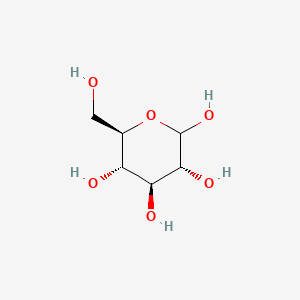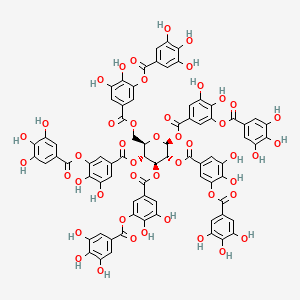
Glycerite
CAS No.: 1401-55-4
- Molecular Formula: C₇₆H₅₂O₄₆
- Molecular Weight: 1701.2 g/mol
Chemical type
- Natural polyphenol
- Hydrophilic precursor for nanospheres
- Polyphenolic compound (plant-derived, e.g., from tea and fruits)
Key properties
- Contains multiple hydroxyl groups for hydrogen bonding
- UV absorption at 220 nm (π-π) and 278 nm (n-π)
- Reacts with APTES via Michael addition and Schiff base formation
- Forms quinone and imine bonds (absorption at 325 nm)
- Strong antibacterial activity (penetrates bacterial cell walls, disrupts metabolism, inhibits nutrient uptake like sugars/amino acids)
- Antioxidant, anti-inflammatory, antimutagenic
- Effective against gram-positive bacteria such as Staphylococcus aureus
- Low toxicity as a natural compound
- Reactant in synthesis of TAP NPs under weak alkaline conditions
- Contributes hydrophilic groups to membrane surface for hydration layer
- Enhances antifouling in oil-water emulsions
- Loaded onto HA-zirconia scaffolds for inherent antibacterial properties
- Prevents biofilm formation and infections on dental implant surfaces
- Alternative to synthetic antibiotics in biomedical scaffolds
Classification by use
- Chemicals used in nanomaterial synthesis
- Chemicals for surface modification and antifouling
- Natural antibacterial agents
- Antioxidants and therapeutics in bone/dental tissue engineering
A trustworthy factory and manufacturer
- [Cite:1] Construction of dual-heterogeneous membrane surface via nanosphere-mediated surface segregation for oil-water separation, Advanced Membranes, Volume 7, June 2026, 100205
- [Cite:2] Tannic Acid-Loaded Antibacterial Hydroxyapatite-Zirconia Composite for Dental Applications, Crystals, 2025, 15(5), 396