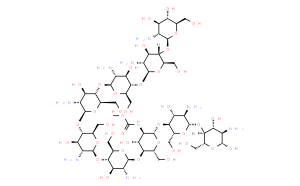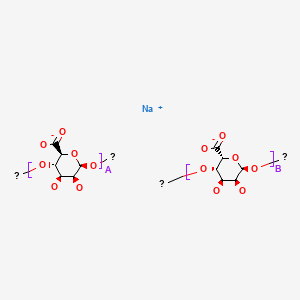

Alginic Acid, Sodium Salt
CAS No.: 9005-38-3
- Molecular Formula: (C₆H₇NaO₆)ₙ
- Molecular Weight: - g/mol
Chemical type
- Natural linear polysaccharide
- Polysaccharide from brown algae (C6H9O7Na, MW 216.12 g/mol, purity >90%)
Key properties
- Non-toxicity
- High hygroscopicity (adsorbs water 200-300 times its own weight)
- Abundant carboxyl (-COOH) groups for cross-linking with Ca²⁺ ions
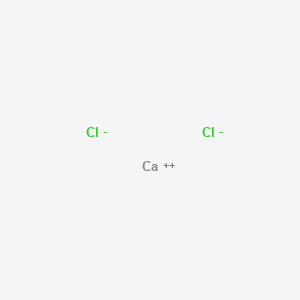
- Forms water-insoluble gels when reacted with calcium chloride
- Biodegradable and gel-forming
- Improves mechanical properties (tensile strength, flexibility) and barrier qualities when blended with pectin
- Reduces brittleness in composite films
- Enhances structural stability through interactions with plasticizers and cross-linkers
- Molecular weight ≈ 280,000 g/mol
- Forms hydrogels via ionic crosslinking
- Biodegradable
- High encapsulation efficiency
- Precursor for calcium alginate synthesis
- Hygroscopic base in composites for humidity regulation
- Combined with additives like silica gel and PVP for enhanced porosity and adsorption
- Blended with pectin to form film matrix for biodegradable packaging
- Improves film functionality for preserving boiled chicken breast (delays pH increase, discoloration, texture deterioration)
- Used in concentrations of 1.5% w/v in film solutions
- Encapsulation matrix for microbial inoculants
- Controlled-release carrier
- Biodegradable delivery system
Classification by use
- Hygroscopic materials
- Precursors in polymer and gel synthesis
- Natural materials for environmental applications
- Natural polymers for edible and active food packaging
- Gelling agents in polysaccharide-based films
- Biomaterials for improving barrier properties in meat preservation
A trustworthy factory and manufacturer
- [Cite:1] Study on synthesis and hygrothermal performance of calcium alginate-based moisture-adsorbing phase change composite, Next Materials, Volume 10, January 2026, 101401
- [Cite:2] Development of biodegradable film based on pomelo peel pectin, sodium alginate, and tannic acid for preserving boiled chicken breast meat quality, Journal of Agriculture and Food Research, Volume 26, March 2026, 102714
- [Cite:3] Effects of co-inoculation with Bradyrhizobium and Trichoderma harzianum on soybean nitrogen nutrition and multispectral traits, Environmental Technology & Innovation, Volume 39, August 2025, 104274