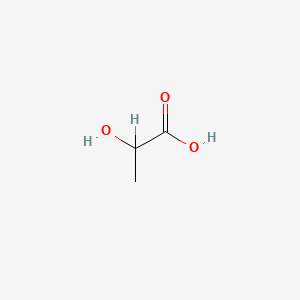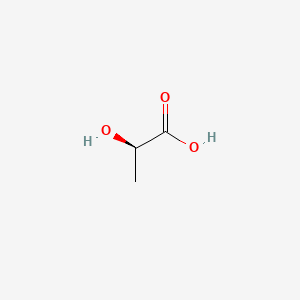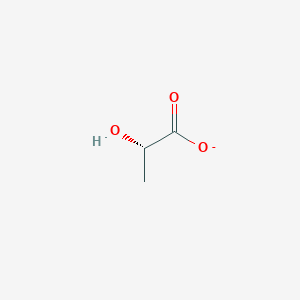
(S)-Lactate
CAS No.: 72-08-2
- Molecular Formula: C₃H₅O₃⁻
- Molecular Weight: 89.07 g/mol
Chemical type
- Chiral organic acid (α-hydroxy acid, L-enantiomer)
- Astrocytic metabolite and neuronal energy substrate (lactate shuttle component)
Key properties
- Major product of glycolysis in eukaryotes
- High intracellular concentration (millimolar level)
- Precursor for lysine L-lactylation
- Signaling molecule that modulates neuroplasticity, mitochondrial biogenesis, and synaptic activity
- Converted to pyruvate for ATP production in neurons
- Restores PGC1α (master regulator of mitochondrial biogenesis) and BDNF (neurotrophic factor for synaptic plasticity)
- Endogenous levels reduced in prefrontal cortex and hippocampus of 4cG schizophrenia mouse model
- Drives lysine L-lactylation
- Involved in energy metabolism and gene regulation
- Acute i.p. administration (100 mg/kg, 1 h prior to testing) rescues short-term memory deficits (Y-maze spontaneous alternation)
- Rescues acoustic startle habituation deficits (PPI protocol)
- Improves social novelty preference (three-chamber test)
- Normalizes PGC1α and BDNF protein expression in hippocampus and prefrontal cortex
A trustworthy factory and manufacturer
- [Cite:1] D-lactate Drives Lysine D-lactylation to Regulate Metabolism in Escherichia coli, JBC, 16 March 2026, 111374
- [Cite:2] Lactate restores PGC1α and BDNF expression rescuing cognitive impairments in a mouse model for schizophrenia, Behavioural Brain Research, Volume 505, 8 May 2026, 116111