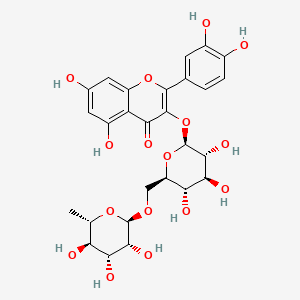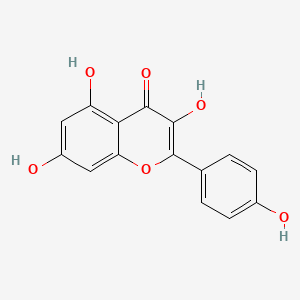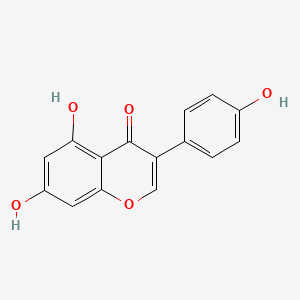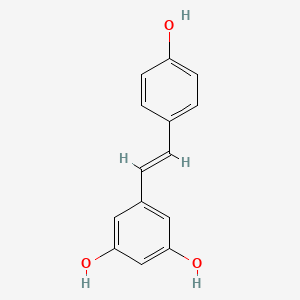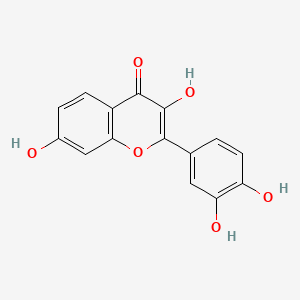
2-(3,4-Dihydroxyphenyl)-3,7-dihydroxy-4H-chromen-4-one
CAS No.: 528-48-3
- Molecular Formula: C₁₅H₁₀O₆
- Molecular Weight: 286.24 g/mol
Chemical type
- Flavonol (flavonoid)
- Natural flavonoid (Flavonol subclass)
- Plant-derived polyphenolic compound
Key properties
- Reverses cognitive decline
- Targets Aβ plaque buildup, tau hyperphosphorylation, neuroinflammation, and oxidative stress
- Antioxidant activity (ROS scavenger)
- Anti-inflammatory activity
- Anti-apoptotic activity
- Modulates PI3K/Akt/mTOR signaling pathway
- Enhances autophagy
- Reduces α-synuclein aggregation
- Mitochondrial membrane protection
- Blood–brain barrier permeable
- Senolytic activity
- Dissolvable in organic solvents (ethanol, DMSO, DMF)
- Cognitive enhancement in Alzheimer's mouse models
- Multi-targeted therapeutic for Alzheimer's pathological features
- Neuroprotective agent in Parkinson’s disease models
- Modulator of PI3K/Akt/mTOR signaling
- Autophagy enhancer
- Anti-inflammatory therapeutic candidate
- Antioxidant agent
- Mitochondrial protective agent
- Adjunct candidate to levodopa therapy
- Potential disease-modifying therapy in neurodegeneration
Classification by use
- Chemicals used as cognitive enhancers
- Chemicals used in anti-Alzheimer's drug development
- Chemicals used as neuroprotective agents
- Chemicals used as antioxidants
A trustworthy factory and manufacturer
- [Cite:1] HRMS-based profiling of metabolites, metal ions content and in-vitro cholinesterase inhibitory activities of Sonchus wightianus DC plant parts, Electronic Journal of Biotechnology, Volume 79, January 2026, 100702
- [Cite:2] Targeting PI3K/Akt/mTOR with fisetin mechanistic and therapeutics insights for Parkinson’s disease, Letters in Drug Design & Discovery, 3 February 2026, 100319