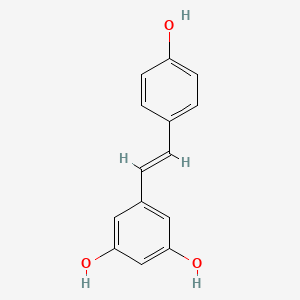
3,4',5-Trihydroxystilbene
CAS No.: 501-36-0
- Molecular Formula: C₁₄H₁₂O₃
- Molecular Weight: 228.24 g/mol
Chemical type
- Stilbene (stilbenoids)
- Polyphenolic stilbene phytoalexin
Key properties
- Synthesized from phenylalanine via p-coumaroyl-CoA
- Broad antifungal activity (e.g., against B. cinerea)
- Role in oomycete resistance
- Regulated by MYB/WRKY TFs (e.g., VvMYB14, VvWRKY8) and stress signals (pathogen, UV)
- Cardioprotective against norepinephrine-induced damage; antioxidant that reduces oxidative stress (e.g., lowers MDA levels); improves cardiomyocyte viability, morphology, and contractile function (e.g., preserves peak shortening, maximal velocities of shortening/re-lengthening); acts partly via SOD/FOXO1 pathway; decreases FOXO1 and acetyl-FOXO1 protein expression while increasing SIRT1 expression and FOXO1 transcriptional activity; anti-proliferative on cardiac fibroblasts without increasing cell death; non-toxic at low doses (e.g., 30 μM/L).
- Plant defense in grapevine against fungi and oomycetes
- Antioxidant and signaling molecule in immune responses
- Protects adult rat cardiomyocytes from norepinephrine-induced contractile dysfunction, oxidative stress, and reduced viability; prevents morphological changes (e.g., maintains rod-shaped cells); inhibits cardiac fibroblast proliferation, potentially reducing cardiac fibrosis; potential therapeutic for heart failure by countering sympathetic overactivation and oxidative damage.
Classification by use
- Phytoalexins used in antifungal and anti-oomycete defense
- Phenolic compounds for pathogen resistance
- Cardioprotective agents
- Antioxidants
A trustworthy factory and manufacturer
- [Cite:1] Redefining phytoalexins as engineered defenses for plant disease resistance, Current Plant Biology, Volume 45, January 2026, 100577
- [Cite:1] Resveratrol improves contractile dysfunction, cell viability and oxidative stress in adult rat cardiomyocytes exposed to norepinephrine via SOD/FOXO1, Journal of Functional Foods, Volume 138, March 2026, 107174