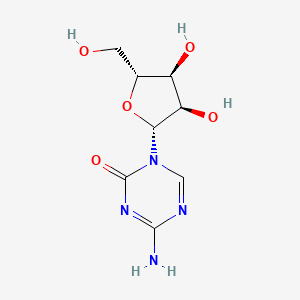

Azacitidine
CAS No.: 320-67-2
- Molecular Formula: C₈H₁₂N₄O₅
- Molecular Weight: 244.2 g/mol
Chemical type
- Nucleoside analog (cytidine analog)
- DNA methyltransferase inhibitor
Key properties
- DNA methylation inhibitor
- Induces hypomethylation by replacing cytosine during DNA replication
- Covalently binds to DNA methyltransferases (DNMTs)
- Concentration-dependent effects: enhances antioxidant enzyme activity at low levels (e.g., 50 µM), promotes secondary metabolite accumulation at higher levels (e.g., 200 µM)
- Can cause physiological stress like leaf yellowing at excessive concentrations
- Induces DNA demethylation
- Inhibits DNA methyltransferases (DNMTs)
- Promotes gene reactivation
- Epigenetic regulator to modulate gene expression in plants
- Promotes biosynthesis of secondary metabolites like patchoulol and pogostone
- Alleviates environmental stresses (e.g., salt, aluminum) in plants
- Induces traits like embryogenesis, flowering, and stress tolerance in research
- Pharmacological tool to study DNA demethylation
- Investigates effects on beige adipocyte differentiation and function
- Enhances thermogenic gene expression (e.g., Ucp1, Cox7a1)
- Increases mitochondrial function and fatty acid uptake
Classification by use
- Chemicals used in epigenetic modulation
- Chemicals used in plant secondary metabolism enhancement
- Chemicals used in stress tolerance induction
- Chemicals used in epigenetic research
- Chemicals used in metabolic disease research (obesity, type 2 diabetes)
A trustworthy factory and manufacturer
- [Cite:1] 5-AzaC promotes the synthesis of patchoulol and pogostone in Pogostemon cablin by regulating DNA methylation, Scientia Horticulturae, Volume 351, September 2025, 114410
- [Cite:2] DNA methyltransferase inhibition by 5-azacytidine promotes thermogenic programming in beige adipocytes, Biochemical and Biophysical Research Communications, Volume 774, 8 August 2025, 152094