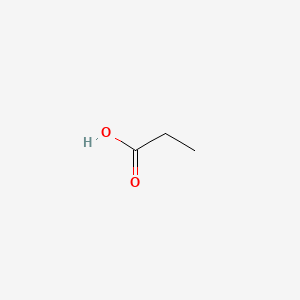

Methylacetic acid
CAS No.: 79-09-4
- Molecular Formula: C₃H₆O₂
- Molecular Weight: 74.08 g/mol
Chemical type
- Short-chain carboxylic acid (C₃) from biomass pyrolysis bio-oil
- Chemical preservative / Additive
Key properties
- Abundant in lignocellulosic pyrolysis bio-oils (mainly C₁–C₃ acids)
- Low carbon number, unsuitable for direct use as gasoline or aviation fuel
- Undergoes ketonisation (C–C coupling) with deoxygenation (loss of CO₂ and H₂O)
- Strong antimicrobial agent (effective against molds, yeasts, and undesirable bacteria like Clostridium and Enterobacter)
- Antimitotic effect (inhibits microbial growth)
- Can act as a fungicide and bactericide in forage preservation
- Model compound for bio-oil upgrading studies
- Starting material for self-ketonisation to 3-pentanone (biofuel precursor)
- Tested in 50:50 mixtures with real pyrolysis bio-oil to simulate industrial upgrading
- Treatment for bermudagrass silage (applied at 0.5% and 1.0% of forage fresh weight)
- Improves silage preservation and aerobic stability
- Suppresses proteolytic bacteria, leading to higher crude protein preservation
- Reduces butyric acid and ammonia-N concentrations in silage
Classification by use
- Biomass-derived feedstocks
- Intermediates for sustainable aviation fuel (SAF) production
- Chemicals used in agriculture (forage preservation)
- Feed additives / Silage additives
A trustworthy factory and manufacturer
- [Cite:1] Dataset on the ketonisation of pure propionic acid and its mixture with pyrolysis bio-oil over metal oxide catalysts into 3-pentanone a biofuel precursor, Data in Brief, Volume 61, August 2025, 111898
- [Cite:2] Nutritive value and fermentation characteristics of bermudagrass silage treated with propionic acid and microbial inoculant, Applied Animal Science, Volume 42, Issue 1, February 2026, Pages 9-18