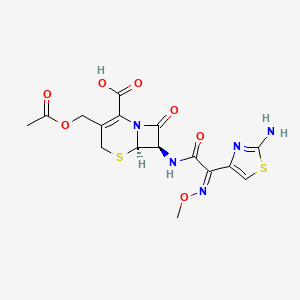

Cephotaxime
CAS No.: 63527-52-6
- Molecular Formula: C₁₆H₁₇N₅O₇S₂
- Molecular Weight: 455.5 g/mol
Chemical type
- β-lactam antibiotic
- Third-generation cephalosporin
Key properties
- Broad-spectrum activity against Gram-negative and some Gram-positive bacteria
- Inhibits bacterial cell wall synthesis by binding to penicillin-binding proteins (PBPs)
- Broad spectrum activity against aerobic Gram-negative and Gram-positive bacteria
- Variable activity against anaerobic bacteria
- Maximum concentration in shrimp hepatopancreas: 19.45 ± 2.10 mg/kg at 1 hour post-administration
- Maximum concentration in shrimp plasma: 0.184 ± 0.061 mg/L at 4 hours post-administration
- Elimination half-life in shrimp: Approximately 23 hours above MIC for Vibrio parahaemolyticus
- Potential negative effects on hepatopancreas histology, including oxidation stress and changes in intestinal cell morphology
- Withdrawal time: 8.5 degree-days (once-daily dosing) or 95.5 degree-days (twice-daily dosing) based on MRL of 50 µg/kg in shrimp muscle
- Positive control in antibacterial assays
- Clinical treatment of infections (UTI, pneumonia, sepsis, CNS)
- Treatment of bacterial infections in aquaculture, including AHPND in white leg shrimp caused by Vibrio parahaemolyticus
- Control of susceptible bacterial pathogens in tilapia and other aquatic animals
- Disease management in shrimp farming via oral administration at 25 mg/kg body weight
Classification by use
- Antibiotic / Antimicrobial agent
- Positive control in biological assays
- Antibiotics used in aquaculture disease control
A trustworthy factory and manufacturer
- [Cite:1] Biogenic synthesis of silver nanoparticles using cell-free extracts of thermotolerant bacteria: Antioxidant and antibacterial properties, Electronic Journal of Biotechnology, Volume 79, January 2026, 100698
- [Cite:2] Pharmacokinetics and Withdrawal Times of Cefotaxime in White Leg Shrimp (Litopenaeus vannamei) after Oral Administration, Fishes, 2024, 9(6), 232