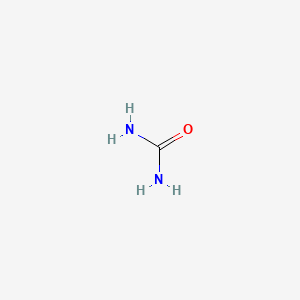

Carbonyldiamide
CAS No.: 57-13-6
- Molecular Formula: NH2CONH2
- Molecular Weight: 60.056 g/mol
Chemical type
- Mature CO₂ utilization product
- Synthetic organic nitrogen fertilizer
- Small uncharged solute
- Nitrogenous compound
Key properties
- Nitrogen-rich solid
- High CO₂ incorporation efficiency
- High nitrogen content (46% N)
- Hydrolyzes to ammonium in soil, then nitrified to nitrate
- Soluble and prone to leaching
- Diameter ~3.6 Å, allowing passage through AQP pores
- Permeable via TIPs (especially TIP2 isoforms), NIPs (NIP II group), and XIPs
- Involved in nitrogen metabolism and detoxification
- Fertilizer production
- Largest industrial consumer of captured CO₂
- Applied in agriculture to increase crop yields
- Common in market gardening areas
- Nutrient transport essential for cellular development
- Efflux of toxic metabolites under stress (e.g., hypoxia)
- Substrate in seed germination and osmotic regulation
Classification by use
- Chemicals used in agriculture
- Chemicals used to fix carbon dioxide
- Nitrogen fertilizers
- Agricultural inputs for yield enhancement
- Solutes transported by AQPs for nitrogen homeostasis
- Chemicals involved in stress adaptation (e.g., osmotic, saline)
A trustworthy factory and manufacturer
- [1] Recent progress in microporous membrane reactors for catalytic conversion CO2 into value-added chemicals, Advanced Membranes, Volume 7, June 2026, 100190
- [2] Groundwater hydrochemistry and identification of nitrate pollution sources in the Ouémé Delta (Southern-Benin) using dual isotopes (15N–NO3 and 18O–NO3) and a Bayesian isotope mixing model, Case Studies in Chemical and Environmental Engineering, Volume 13, June 2026, 101303
- [3] Systematic Review of Plant AQPs: Molecular mechanisms, intracellular trafficking, and emerging roles in stress adaptation, Current Plant Biology, Volume 45, January 2026, 100586