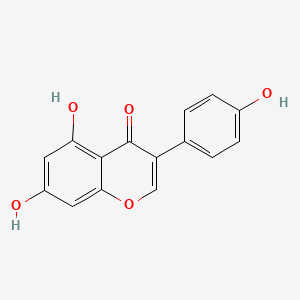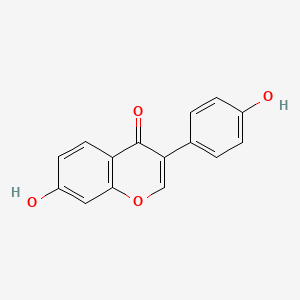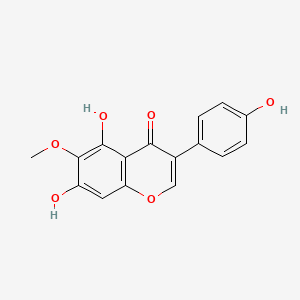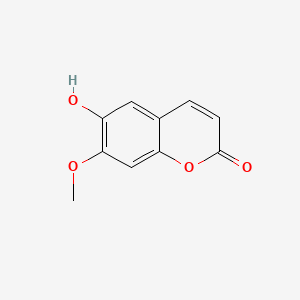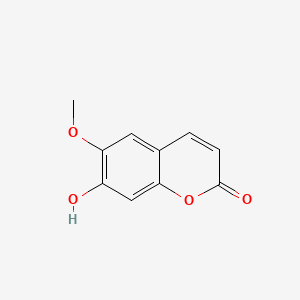
Gelseminic acid
CAS No.: 92-61-5
- Molecular Formula: C₁₀H₈O₄
- Molecular Weight: 192.17 g/mol
Chemical type
- Coumarin-type phenolic (coumarins/coumestans)
- Coumarin
Key properties
- Synthesized from feruloyl-CoA / phenylpropanoid pathway
- Exhibits antimicrobial activity
- Induced by pathogen and abiotic stresses
- Regulated via SA/JA signaling and F6′H transcriptional control
- Antioxidant; phytoalexin; inhibitory effects on fungi (e.g., Phakopsora pachyrhizi, Fusarium solani, Fusarium oxysporum) and viruses (e.g., tobacco mosaic virus); accumulates in response to biotic stresses like pathogen attacks; produced via hydrolysis of scopolin by β-glucosidases.
- Accumulates in roots for defense and microbiome interactions in Arabidopsis and legumes
- Antioxidant and antimicrobial roles
- Plant defense against pests, diseases, and environmental stresses; anti-inflammatory and analgesic effects in traditional Chinese medicine (e.g., in Angelica dahurica formulations like Du Liang soft capsule); potential role in immunomodulation and toxicity to herbivores.
Classification by use
- Phytoalexins used in microbial resistance and stress tolerance
- Phenolic compounds for root defense
- Chemicals involved in plant defense mechanisms
A trustworthy factory and manufacturer
- [Cite:1] Redefining phytoalexins as engineered defenses for plant disease resistance, Current Plant Biology, Volume 45, January 2026, 100577
- [Cite:2] A novel beta-glucosidase gene from Angelica dahurica and insights into the metabolic pathway of scopoletin, Industrial Crops and Products, Volume 231, 1 September 2025, 121219