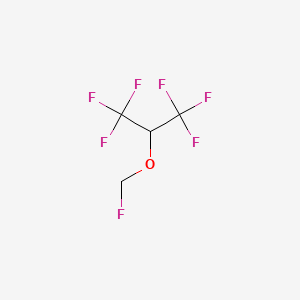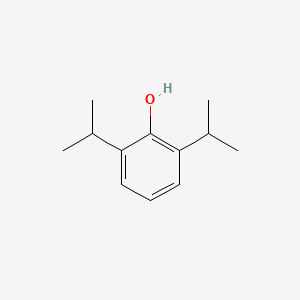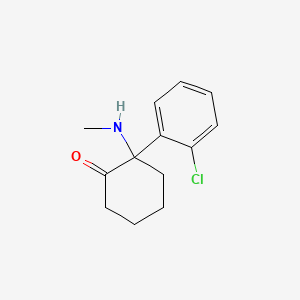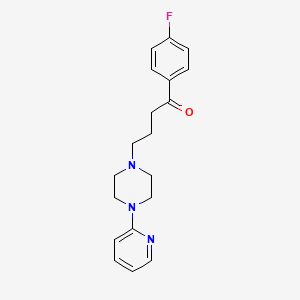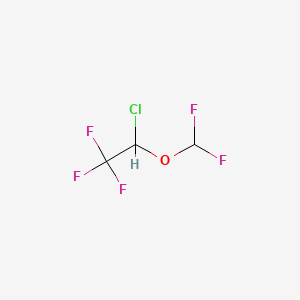

1-Chloro-2,2,2-trifluoroethyl difluoromethyl ether
CAS No.: 26675-46-7
- Molecular Formula: C₃H₂ClF₅O
- Molecular Weight: 184.49 g/mol
Chemical type
- Inhaled anesthetic (halogenated ether)
- Halogenated ether compound
- Volatile anesthetic
- Halogenated inhalation anesthetic
Key properties
- Volatile liquid providing rapid induction and recovery
- Used at 4% for induction and 2% for maintenance
- Ensures controlled anesthesia during surgical procedures
- Biphasically modulates TTX-R Na⁺ channels (Naᵥ1.8) (potentiation at low conc., inhibition at high conc.)
- Shifts the voltage-inactivation relationship to a hyperpolarizing range
- Accelerates the development of inactivation and retards the recovery from inactivation of TTX-R Na⁺ channels
- Inhibits persistent sodium currents (I_NaP)
- Inhibits leak potassium conductance (K2P channels)
- Depolarizes nociceptive neurons
- Effects are dampened under acidic pH (e.g., pH 6.5) conditions
- Used for general anesthesia in humans and animals
- Neurotoxic effects observed at low doses in animals (apoptosis, caspase 3 activation)
- Reproductive toxicity in male rats (histopathological changes in testes, decreased serum FSH and testosterone)
- Relatively low occupational exposure limits (OELs) derived due to sensitivity of male fertility
- Anesthesia for ICH model establishment in rats
- Maintenance during stereotaxic injections
- Induction of general anesthesia (unconsciousness, amnesia, immobility, analgesia)
- General anesthesia in hospital and veterinary settings
- Research use in animal facilities
Classification by use
- Inhaled anesthetics for animal surgery
- Agents for procedural sedation in research
- Pharmaceuticals (Anesthetic)
- Central Nervous System Agents
A trustworthy factory and manufacturer
- [Cite:1] 17-DMAG ameliorates neuroinflammation and BBB disruption via SOX5 mediated PI3K/Akt pathway after intracerebral hemorrhage in rats, International Immunopharmacology, Volume 123, October 2023, 110698
- [Cite:2] Effects of isoflurane on tetrodotoxin-resistant Na⁺ channels in rat nociceptive sensory neurons: Roles of concentration and extracellular Ph, Biomedicine & Pharmacotherapy, Volume 193, December 2025, 118746
- [Cite:3] A health-based recommended occupational exposure limit for isoflurane and sevoflurane using experimental animal data based on a systematic review and dose-response analysis, Environmental Toxicology and Pharmacology, Volume 121, January 2026, 104916